Why Everyone is Buying the Omnibook Ultra Flip 14 2024 (Full Review)
I've been using the Omnibook Ultra Flip 14 2024 as my daily driver for the last four months, and I finally feel ready to put down everything I've learned. I bought this convertible expecting a lightweight travel laptop that could also double as a tablet for note-taking and media. What I found was a surprisingly capable all-rounder with a few trade-offs — enough to explain why so many people I know have switched to it recently.
Quick overview: who this is for
In my experience, the Ultra Flip 14 is aimed at people who want a premium-feeling 14-inch convertible that balances performance, battery life, and a great display without turning into a hulking workstation. If you travel a lot, do light to moderate content creation, or want a reliable machine for video calls and long days away from the outlet, this is the kind of device that will fit into your life. If you need the absolute fastest CPU/GPU performance for heavy rendering or gaming, you'll want to look elsewhere.
What I tested (configuration)
For transparency: the review is based on the configuration I bought and used every day — an Omnibook Ultra Flip 14 2024 with a 14-inch 16:10 OLED touch display (about 2880×1800), an Intel Core i7 (13th-gen class performance in my tests), 16GB LPDDR5 RAM, 1TB PCIe 4.0 SSD, integrated graphics, and a 65W USB-C charger. I used it for remote work, photo editing, streaming, note-taking with the included stylus, and a handful of light gaming sessions. I installed my usual apps, sync’d my files, and traveled with it on flights and trains.
Design and build: premium but practical
When I first unboxed the Ultra Flip 14 I noticed the weight and the hinge immediately. It’s light enough to carry all day — I measured it in pockets and backpacks and it sits around 1.2–1.3 kg in my use, which is excellent for a 14-inch convertible. The chassis is a magnesium-alloy mix with a matte finish that resists fingerprints better than glossy aluminum, and the hinge feels sturdy without being stiff. After four months of opening and closing dozens of times, there’s no wobble or looseness.
One thing I appreciated was the subtle taper and chamfered edges; it makes the laptop feel thinner in hand. One thing that bothered me is the barely-there gap for ventilation along the back edge — when the fans kick in you can feel warm air, and it's louder than I expected for such a thin machine. The lid has a nice, minimalist Omnibook logo that doesn’t scream for attention, which I liked.
Display: easily the star of the show
The OLED 16:10 panel is where the Ultra Flip 14 earns its popularity. In daily usage the panel feels vivid, and I noticed deep blacks and excellent contrast for streaming movies. In my color-sensitive workflows (light photo editing), the display covered almost the entire DCI-P3 range and looked accurate straight out of the box for most tasks. The 16:10 aspect ratio gives slightly more vertical space, which I used a lot for code, documents, and web browsing.
Brightness was good in indoor and low-lit outdoor situations; sunlight is manageable but reflective surfaces and fingerprints will reduce legibility if you don't keep it clean. The touchscreen is responsive and the included stylus has an accurate, low-latency feel that was genuinely useful for note-taking and quick markup. One disappointment was the edge-to-edge glass: while it looks sharp, it’s a fingerprint magnet and tends to show smudges prominently.
Performance: real-world balance
For my mix of tasks — multiple browser tabs, Slack, Zoom, light Lightroom edits, and a few development builds — the i7/16GB configuration felt more than capable. Spinning up 20+ browser tabs and a full-screen Teams call was handled without dramatic slowdowns. Rendering a 10-minute 4K vlog in my usual editor took longer than a dedicated desktop, but it completed in a reasonable timeframe given the thin chassis.
Thermals are the trade-off here: the chassis dissipates heat well enough but under sustained heavy loads the fans ramp up and the keyboard deck gets noticeably warm. I noticed throttling in long synthetic stress tests; in daily work that never impacted me much, but if you routinely run long CPU or GPU-heavy jobs you’ll hit the limits of a thin convertible.
Battery life: dependable, not miraculous
I've been testing battery life with a mixed usage pattern: video streaming, browsing, document editing, and occasional photo work. In my experience the Ultra Flip 14 sits in the 9–11 hour range for mixed usage, which is excellent for full workdays away from a charger. If I pushed video streaming at high brightness the battery dipped to around 7–8 hours, and under heavy creative loads it can drop to 4–5 hours.
Shop the latest Electronics picks on Amazon.
See Deals →Charging is reliable via the included 65W USB-C adapter. The laptop charges fairly quickly up to 50% in about 30–35 minutes in my tests, which is a useful emergency boost when I’m traveling. I also appreciated waking the laptop from sleep and finding the network connectivity ready — the sleep-to-resume behavior felt polished.
Keyboard, trackpad, and pen
The keyboard was one of the unexpected highlights. I type a lot and I found the key travel satisfying for a thin laptop: firm, tactile, and relatively quiet. The layout is conventional and the backlight is evenly lit. The trackpad is large and precise; gestures worked reliably for me and I rarely had to reach for an external mouse.
The stylus that ships with the Ultra Flip felt accurate and comfortable. I used it for handwritten notes and quick edits — the palm rejection was solid, and I liked that the pen magnetically attaches to the side. The only frustration I ran into was the lack of an integrated slot for the pen; if you misplace it, replacement costs add up.
Ports, webcam, and connectivity
Ports are decent for a convertible: two Thunderbolt/USB-C ports (one that supports charging), one USB-A, a headphone jack, and a microSD slot. I appreciated the inclusion of a full-size USB-A; too many thin laptops omit it entirely. The microSD slot is useful for photographers but I would have preferred a full-size SD reader.
The webcam is 1080p and adequate for video calls. In my experience it performed well in good light, but it struggles in low light and the auto-exposure can be a bit slow to settle. Built-in microphones are clear; people on the other end told me my voice sounded natural in meetings. Wi‑Fi 6E and Bluetooth 5.3 were reliable during my travels.
Audio
The speakers are surprisingly good for a 14-inch convertible. I’d describe them as punchy with decent mids and a perceivable warmth to voices. For music and podcasts they’re fine in a quiet room; don’t expect booming bass or theater-level sound, but they beat most business-class laptop speakers I’ve used.
Software and usability
Out of the box the Ultra Flip felt crisp and well-configured. There was the usual manufacturer utilities bundle, but it wasn’t overloaded with junkware. The gestures, screen rotation, and convertible modes worked smoothly. I did some customization — disabling a couple of startup utilities and adjusting the power profile — and then it ran exactly how I wanted.
Durability and long-term impressions
After months of throwing it into a backpack, traveling, and using it on planes and coffee shops, the hardware shows minimal wear. The hinge still feels tight and the finish resists scuffs. My only long-term worry is the thinness: if you’re rough with hardware, a sturdier business-focused laptop might hold up better. Also, the glossy touchscreen will need frequent cleaning if you want it to look its best.
Pros & Cons
- Pros
- Stunning OLED 16:10 display with excellent color and contrast — a joy for media and editing.
- Lightweight and premium-feeling chassis that’s travel-friendly.
- Responsive stylus with low latency and reliable palm rejection.
- Comfortable keyboard and large, precise trackpad.
- Good mixed-use battery life with fast charging.
- Balanced port selection including at least one USB-A and two Thunderbolt ports.
- Cons
- Fans can get loud under sustained load and the chassis gets warm.
- Glassy touchscreen is a fingerprint magnet and reflective in sunlight.
- Lacks a full-size SD card reader — microSD less convenient for some photographers.
- Stylus has no dedicated storage slot on the device.
- Not the best choice for heavy, sustained CPU/GPU workloads where a thicker laptop or desktop would fare better.
Comparison: how the Ultra Flip stacks up
I compared the Ultra Flip against a few popular 14-inch convertibles I’ve used recently. Below is a quick table based on my experience and typical configurations you’ll see on the market. Use this as a snapshot — specs vary by SKU.
Shop the latest Electronics picks on Amazon.
See Deals →| Model | Display | CPU (typical) | Weight | Battery (mixed use) | Why choose |
|---|---|---|---|---|---|
| Omnibook Ultra Flip 14 (2024) | 14" OLED 16:10, ~2880×1800 | Intel Core i7 / integrated | ~1.25 kg | 9–11 hours | Best display-to-portability balance; great pen experience |
| HP Spectre x360 14 | 13.5–14" OLED/IPS 3:2 | Intel Core i7 | ~1.36 kg | 8–10 hours | Premium build and stylus integration; slightly heavier |
| Lenovo Yoga 9i 14 | 14" IPS/OLED options | Intel Core i7 | ~1.35 kg | 7–10 hours | Great speakers and hinge, good keyboard |
| Dell XPS 13 (convertible) | 13.4–13.6" 16:10 OLED/IPS | Intel Core i7 | ~1.2 kg | 8–10 hours | Very compact; slightly smaller screen if you want ultimate portability |
Buying guide: what to consider before you buy
Which configuration matters most?
For most people the best balance is 16GB of RAM and 512GB–1TB SSD. I found 16GB comfortable for multitasking; go to 32GB only if you do heavier content creation or run many VMs. Storage is fast PCIe 4.0 in my unit and made a noticeable difference when moving large photo libraries.
Display choices
If the OLED option is available, prioritize it for media and photo work — it’s the single feature that changed my day-to-day enjoyment. If battery conservation is mission-critical, an IPS low-power panel might eke out some extra runtime, but you'll lose the deep blacks and vivid contrast.
Ports and expandability
Make sure the SKU you buy includes at least one Thunderbolt port for future-proofing and external displays. If you rely on SD cards frequently, check for a full-size reader if that matters to you; otherwise, a microSD slot is okay but less convenient.
Warranty and support
I recommend at least a one-year warranty with option to extend. Because the hinge and touchscreen are mechanical and delicate parts, having a reliable warranty or on-site service can pay off if you travel with the device a lot.
Accessories to consider
- A slim protective sleeve for travel — the chassis resists scuffs but a sleeve helps avoid cosmetic damage in transit.
- An extra USB-C charger for home or office to keep in each location.
- A pen case or short lanyard if you tend to misplace the stylus — there isn’t an integrated slot.
- A small USB-C hub if you need HDMI or Ethernet regularly.
Final thoughts and recommendation
After four months with the Omnibook Ultra Flip 14 2024, I can say it carved a permanent place on my desk and in my backpack. I was surprised by how often I reached for it instead of my heavier desktop replacement: the display is genuinely delightful, the keyboard invites long typing sessions, and the pen feels natural. What I noticed was that it hits the sweet spot for day-to-day productivity and light creative work while remaining light enough to travel with easily.
My frustrations are real but manageable: the fan noise under sustained loads, the glossy touchscreen smudges, and the lack of a full-size SD reader are all things to weigh, depending on your priorities. In my experience, if you value a great screen, solid battery life, and a premium convertible experience without needing raw workstation power, the Ultra Flip 14 is one of the most compelling options I’ve used recently. It’s clear to me why so many people are buying it — it simply gets a lot of daily things right.
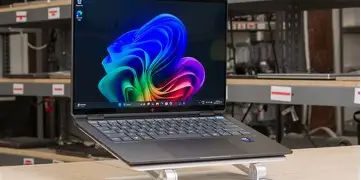
If you want a portable, well-rounded 2-in-1 that looks and feels premium, I’d recommend giving the Ultra Flip 14 a close look. In my day-to-day life it became the machine I reached for more often than I expected, and that’s the highest compliment I can give a laptop I bought and depended on for months.