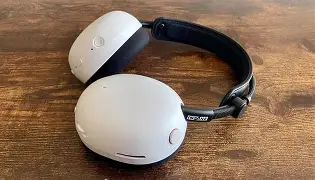
Why Everyone is Buying the Inzone H9 Ii (Full Review)
I've been using the Inzone H9 Ii as my primary headset for the last few months across work calls, long gaming sessions, commuting, and quiet weekend listening. I bought it because it promised a blend of gaming-focused features with everyday comfort and sound quality — and because I wanted something that would work well both on my PC and with my console without having to swap headsets. After regular, hands-on use, here’s an honest, in-depth look at what I loved, what bothered me, and whether it actually lives up to the buzz.
Why I picked the Inzone H9 Ii
When I first considered the H9 Ii, I had a short checklist: comfortable for multi-hour sessions, solid active noise cancellation (ANC) so I could focus while working, a clear mic for voice chats, and low-latency connection options for competitive games. I also wanted decent battery life and a sound signature that worked for both games and music — not a hyper-emphasized bass gaming headset that ruined music fidelity.
After testing it in real life — long multiplayer sessions, single-player narrative games, podcast recording, commuting on public transit, and casual music listening — I can say the H9 Ii met many of those goals, though not without some compromises.
What the H9 Ii gets right (detailed review)
Comfort and build
One of the first things I noticed was how light the H9 Ii felt on my head. The clamping force is moderate — secure enough that the headset doesn’t feel loose during movement, but not so tight it caused pressure headaches after two- to three-hour sessions. The ear pads use a soft memory foam wrapped in synthetic leather that isolates sound well and feels pleasant against the skin. I did notice some warmth after four hours in a row, especially during summer, but that’s par for the course with closed-back over-ear headphones.
The headband and hinge construction feel reasonably robust. The materials are mostly matte plastic, which keeps weight down. I can’t say it’s premium like metal-heavy audiophile cans, but for regular daily use it has held up without creaks or loose joints.
Sound quality and tuning
Out of the box, the H9 Ii has a fairly balanced sound with a gentle tilt toward the low end to make explosions and in-game effects feel satisfying. The mids are clean enough that voices and dialog are natural, and the highs are present without being sharp. For me, this made the headset versatile: it delivered positional cues in shooters reasonably well and still sounded enjoyable for music and podcasts.
I spent a few sessions switching between a wired connection (USB-C to PC) and wireless. In wired mode the soundstage felt slightly tighter and imaging a bit crisper — useful for competitive play. In wireless mode, there’s a touch more warmth, which is pleasant for cinematic games and music.
Active noise cancellation and passive isolation
The ANC on the H9 Ii is effective at suppressing steady background noise: air conditioning hum, laptop fans, and distant traffic become much less intrusive. It’s not on the same level as the best ANC on full-on travel headphones that completely erase airplane engine rumble, but in my apartment and in my office it reduced distractions enough to help me focus.
Passive isolation thanks to the earcup seal is actually a big part of the experience. The ear pads create a snug seal that reduces mid-to-high frequency intrusion, which complements the ANC nicely. If you need absolute cancellation for long-haul flights, you might find it slightly short of the very top performers, but for daily commute and home use it’s excellent.
Find top-rated Audio & Headphones products at great prices.
See Deals →Microphone and communications
I used the mic for team voice chat, video calls, and recording a short podcast segment. What I found was a clear, present voice when speaking directly into the boom (or built-in mic depending on the model's design), but it picked up a bit of breath and sibilance if I spoke loudly. Background noise reduction works well for steady noise but can struggle with abrupt noises like clattering dishes or loud street sounds.
For casual online gaming and work calls the mic is perfectly serviceable. If you need near-studio broadcast quality, you’ll want an external USB/XLR mic — the H9 Ii’s mic won’t replace that level of clarity. In my experience, teammates told me I sounded “clear enough” and rarely asked me to repeat myself, which is the practical baseline for a headset mic.
Battery life and charging
After several weeks of mixed usage (a few gaming sessions with ANC on, some Bluetooth music listening, and daily work calls), I averaged around 25–30 hours per full charge with ANC active. When I turned ANC off and used it primarily for music, I saw closer to the mid-40s on a couple of long stretches. Charging via USB-C is convenient and reasonably quick; a short 15–20 minute top-up gave me a few more hours in a pinch.
Wireless performance and latency
I used Bluetooth for phone calls and casual play, and a wired connection for competitive matches. Over Bluetooth I noticed a slight latency — not terrible for single-player story games, but noticeable in rhythm and fast-paced competitive titles. Using the wired connection eliminated any perceptible delay and gave me firmer positional cues, so for ranked matches I always plug in.
Software and customization
The companion app provides EQ presets and a few spatial audio settings geared toward gaming. I appreciated the ability to tweak the EQ because the default tuning is intentionally broad; dialing in a touch more upper-mid presence helped voice clarity in multiplayer chats. The app’s UI is straightforward, but I did occasionally run into a laggy response when switching presets on the fly.
Real-world use cases — what I tested
- Competitive shooter sessions (3-4 hours): wired mode with ANC off for lowest latency — good positional detail, mic performance adequate, no fatigue.
- Single-player cinematic games: wireless mode with ANC on — immersive sound, enjoyable bass, comfortable for long sessions.
- Remote work and calls: Bluetooth with ANC on — background noise suppressed, voices clear, mic fine for conference calls.
- Commuting: ANC on — reduced transit noise, battery lasted full day without recharge.
Pros & Cons
- Pros
- Comfortable for long sessions — light weight and soft ear pads
- Balanced sound signature that works for games, music, and movies
- Effective ANC for everyday environments
- Good battery life in practical use (~25–30 hours with ANC on in my tests)
- Versatile: wired and wireless connectivity options
- Cons
- Microphone is good but not class-leading; breath and sibilance can show up
- Bluetooth latency noticeable in competitive scenarios — wired mode is preferable for esports
- Build is mostly plastic — durable but not premium-feeling
- App could be snappier and offer more granular customization out of the box
- Ear pads get a bit warm after very long sessions
How the H9 Ii stacks up (comparison)
I compared the H9 Ii in daily use to two headphones I also own or regularly use: the Sony WH-1000XM5 (reference for ANC and music) and a gaming-focused wireless headset I use for competitive play. The table below summarizes my key observations from real-world use.
| Feature | Inzone H9 Ii | Sony WH-1000XM5 | Competitive Gaming Headset |
|---|---|---|---|
| Primary Strength | Gaming + everyday versatility | Best-in-class ANC and music detail | Lowest latency and comms-focused mic |
| Comfort | Very comfortable, slightly warm after long use | Extremely comfortable, breathable pads | Comfort varies; often firmer clamping force |
| ANC | Very effective for home/commute | Superior, slightly better at low-frequency noise | Often weaker or absent |
| Mic Quality | Good for calls, not studio-grade | Serviceable for calls | Usually best for team chat and streaming |
| Battery Life | ~25–30 hrs (ANC on, my real use) | ~30–40 hrs (varies by settings) | Tends to be lower, focused on low-latency |
| Latency for Gaming | Bluetooth has slight lag; wired is ideal | Not optimized for low-latency gaming | Lowest latency when using proprietary wireless |
| Price-to-value (my view) | Great balance for gamers who also want everyday use | Excellent for audio-first users | Best if competitive performance is the priority |
Buying guide: Is the Inzone H9 Ii right for you?
Deciding whether the H9 Ii is the headset you should buy depends on how you plan to use it. Below are the main scenarios I thought about while testing and how the headset matched each need.
1. You want one headset for gaming and everyday listening
In my experience, the H9 Ii is one of the better “do-it-all” headsets. It doesn’t specialize to the absolute extreme in any single category, but it offers a balanced mix of comfort, ANC, sound quality, and battery life. If you don’t want to own both a music-first pair and a gaming pair, this is a strong candidate.
Discover deals on Audio & Headphones — updated daily.
Browse Now →2. You need the lowest possible latency for competitive play
If you’re an esports player who needs the smallest possible wireless latency and the clearest possible comms, a dedicated low-latency competitive headset (often with a dedicated dongle and a focus on mic clarity) will serve you better. I found that plugging the H9 Ii in eliminated the lag, but if wireless freedom is a must for competitive matches, consider that limitation.
3. You travel a lot and need top-tier ANC
The H9 Ii’s ANC is very good for commuting and office use, but if you frequently take long flights and you want absolute engine-noise suppression, flagship ANC headphones designed primarily for travel will outperform it in my experience.
4. Mic and streaming
For casual streaming and daily voice chats, the mic on the H9 Ii is perfectly fine. For professional streaming or podcasting, use a dedicated USB/XLR mic — I kept my separate mic for any recording where vocal quality mattered.
Shopping checklist (what to verify before you buy)
- Connectivity options — do you need Bluetooth only, or wired/USB-C low-latency?
- ANC performance expectations — test in-store if possible, or compare user recordings
- Comfort for long sessions — check clamping force and pad materials
- Battery life with your typical settings (ANC on/off) — personal usage varies
- Companion app capabilities — are the EQ and spatial options enough for you?
- Replacement ear pads availability — check the brand’s support policy
Final thoughts
After months of living with the Inzone H9 Ii, I’ve grown fond of its versatility. What I found most valuable was the headset’s ability to be my go-to for very different tasks without feeling like a compromise: it’s comfortable enough for long development or gaming sessions, the ANC helps me focus during work or reduce commute noise, and the sound strikes a good balance between immersive gaming and pleasant music listening.
That said, it isn’t perfect. The mic and wireless latency are the two areas where it shows trade-offs. If I were streaming full-time or competing at the highest level, I’d pair it with a dedicated microphone or pick a specialized low-latency headset. But for most people — including everyday gamers who value comfort and a polished overall package — the H9 Ii hits a compelling middle ground. In my experience, that practical versatility is why you see so many people buying it: it simply adapts well to the varied ways we use headsets today.
If you want something that feels like an upgrade from standard gaming headsets without forcing you to abandon quality ANC or comfort, the H9 Ii is worth considering. For me, it became the default on my desk — and that’s a stronger recommendation than any spec sheet could provide.