Head-to-Head: Leica Q3 Monochrom vs Sigma 12Mm F 1 4 Dc C (Detailed Comparison)
Introduction
Comparing a specialty camera body to an ultra-wide prime lens may seem unconventional, but photographers who prioritize monochrome imaging, ultra-wide perspectives, or low-light performance often weigh these two types of tools against one another when planning a kit. The Leica Q3 Monochrom represents a purpose-built, full-frame camera with a monochrome sensor and an integrated, fast wide-angle optic focused on image purity and simplified workflow. The Sigma 12mm F1.4 DC C is an ultra-wide, very fast prime that opens up dramatic composition opportunities on APS-C systems and is frequently considered by landscape, architecture, and astrophotography shooters seeking a wide field of view with excellent light-gathering ability.
This article unpacks how each product performs in real-world use, what kinds of photographers will benefit most from each, and how to decide between investing in a monochrome, fixed-lens camera versus a versatile ultra-wide prime. The coverage includes detailed analysis, pros and cons, a comparison table for quick reference, and a buying guide to help translate needs into a purchase decision.
Overview: What each product is designed to do
Leica Q3 Monochrom is positioned for photographers who want the ultimate black-and-white (B&W) image quality without the compromises of demosaicing or color processing. A monochrome sensor omits the color filter array, which increases effective resolution, dynamic range, and light sensitivity. Packaged as a compact, fixed-lens solution in the Q series, the appeal lies in simplicity, single-lens mastery, and a direct dedication to monochrome aesthetics.
Sigma 12mm F1.4 DC C is an ultra-wide prime crafted to deliver expansive perspectives with a very fast maximum aperture. On APS-C bodies the focal length produces an ultra-wide equivalent (roughly 18–19mm depending on crop factor), which is popular for sweeping landscapes, dramatic interiors, and wide-field astrophotography. Its large aperture and optics are aimed at low-light shooting and creative control over depth of field at ultra-wide angles.
Detailed product analysis
Leica Q3 Monochrom — design philosophy and real-world behavior
The Leica Q series is known for its concentrate-on-the-essential design: a full-frame sensor mated to a fast, high-quality wide-angle lens in a compact body. The Monochrom variant removes the color filter to maximize luminance detail. In practice that means cleaner files, higher perceived sharpness, and improved high-ISO performance compared with a color sensor converted to black-and-white.
Real-world advantages include:
- Pure B&W output: Files are optimized for tonal gradation and contrast without color interpolation artifacts.
- Simplified workflow: No need to convert RAW files to black-and-white; the output reflects the camera's direct intent.
- Low-light competence: Monochrome sensors typically deliver better sensitivity, making slow-light street photography and available-light portraits more usable.
Common use cases are street, documentary, environmental portraiture, and any scenario where the photographer values single-lens simplicity and the look of dedicated monochrome imagery. The integrated lens and fixed focal length encourage photographers to move physically and think compositionally, yielding consistent results for those who embrace the constraint.
Sigma 12mm F1.4 DC C — optical character and practical use
The Sigma 12mm F1.4 is built to deliver a very wide field of view combined with a large aperture. That combination makes it attractive for:
- Astrophotography: The wide field and bright aperture permit shorter exposures while still recording faint stars and the Milky Way.
- Landscape and interior photography: Capture broad vistas and tight interiors without resorting to multi-image stitching.
- Creative perspective work: Emphasize scale and foreground elements for immersive composition.
On APS-C bodies, the 12mm focal length becomes an extreme wide-angle in equivalent terms and is often paired with modern mirrorless systems. The lens's fast aperture also helps in low-light interiors and nightscapes, where autofocus and manual focusing behavior will vary depending on the camera body it's mounted to. Photographers who need an ultra-wide field of view but also want the ability to isolate elements at night will find the lens compelling.
Discover deals on Cameras & Photography — updated daily.
See Deals →Build, handling, and ergonomics
Leica's approach centers on tactile quality and streamlined controls. A Q-series camera tends to feel balanced, with a full-featured EVF, straightforward dials, and a fixed lens engineered to match the sensor and body ergonomics. The single-piece design reduces decision fatigue and speeds up shooting — useful for reportage where speed and consistency matter.

Sigma's ultra-wide prime emphasizes a compact-but-substantial lens barrel that balances on APS-C mirrorless bodies. It typically offers a large manual focus ring for precision focusing and often includes a robust build with weather-sealing (model dependent). Because it is a lens rather than a system, it relies on the host camera for ergonomics, stabilization, and menu systems.
Image quality and optical performance
With a monochrome sensor, the Leica Q3 Monochrom's optical train is tuned for luminance resolution rather than color fidelity. That often results in cleaner micro-contrast, improved edge rendering, and smoother tonal transitions. The fixed lens is usually optimized to minimize vignetting, distortion, and aberrations specifically for the sensor it serves, which yields highly predictable performance across the frame.
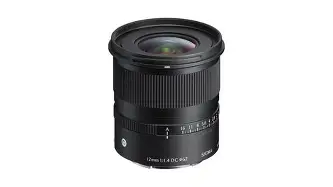
The Sigma 12mm’s hallmark is its ability to resolve detail across a very wide field while maintaining a bright aperture. Its performance is judged by sharpness at the center and edges, coma control (important for stars), and distortion. A well-executed design will show excellent corner performance by stopping down slightly and strong coma control for astrophotography. Chromatic aberration behavior can be corrected in-camera or in raw conversion software on most modern systems.
Autofocus, stabilization, and low-light capability
Autofocus performance on the Leica Q3 Monochrom is integrated and optimized; the single lens and sensor combination allows the camera maker to finely tune AF speed, accuracy, and contrast detection/phase hybrid behavior. Monochrome sensors sometimes enable quicker focusing in low-contrast monochrome scenes since luminance detail is abundant.
Sigma’s 12mm prime relies on the camera body for AF performance. On mirrorless platforms with fast, reliable AF systems, the lens can be snappy and accurate; on older or slower AF systems, it will perform more modestly. Because it offers f/1.4, the lens is advantageous in low light even with manual focus techniques; however, ultra-wide depth of field typically makes focus less critical for landscape distances.
Pros & Cons
Leica Q3 Monochrom — Pros
- Exceptional black-and-white tonal rendition from a dedicated monochrome sensor
- Simplified, single-lens workflow that encourages decisive composition
- High perceived resolution and dynamic range for B&W files
- Robust build quality and refined ergonomics
- Integrated lens and body tuning reduces post-processing complexity
Leica Q3 Monochrom — Cons
- Lack of color capture eliminates flexibility for mixed shooting needs
- Fixed focal length limits compositional options without switching systems
- Higher entry cost for a single-purpose camera compared with interchangeable-lens systems
- Less system expandability (no lens swaps) for specialized photography
Sigma 12mm F1.4 DC C — Pros
- Extremely wide field of view ideal for landscapes, interiors, and astrophotography
- Very fast aperture for an ultra-wide prime, aiding low-light capture
- Creative potential for dramatic perspectives and foreground emphasis
- Can be used across a range of APS-C bodies, offering system flexibility
- Generally strong value relative to specialty ultra-wide primes
Sigma 12mm F1.4 DC C — Cons
- Optical trade-offs at the extreme edges if not stopped down on some bodies
- Performance in coma and chromatic aberration varies by sample and mount
- AF and stabilization depend on the host camera; some bodies may not fully exploit the lens
- Ultra-wide perspectives may require new composition skills and careful foreground management
Side-by-side quick reference
| Attribute | Leica Q3 Monochrom | Sigma 12mm F1.4 DC C |
|---|---|---|
| Type | Monochrome, fixed-lens full-frame camera | Ultra-wide prime lens for APS-C systems |
| Primary purpose | Dedicated black-and-white photography with simplified workflow | Ultra-wide perspectives, low-light wide-field shooting, astrophotography |
| Focal length (equiv.) | Fixed wide-angle (Q series traditionally ~28mm equivalent) | 12mm (~18–19mm equivalent on APS-C, depending on crop factor) |
| Maximum aperture | Fast lens (manufacturer-specified; optimized for B&W) | f/1.4 |
| Best for | Street, documentary B&W, portraiture in monochrome, low-light reportage | Landscapes, interiors, astrophotography, architectural perspective |
| System flexibility | Limited — integrated lens, single focal length | High — usable across compatible APS-C bodies and adaptable systems |
| Portability | Very portable as an all-in-one camera | Lens weight varies but generally compact for an f/1.4 ultra-wide |
| Price/value signals | Premium for dedicated performance and build | Often strong value for wide-angle and aperture combination |
Buying guide: which to pick and why
Choosing between a Leica Q3 Monochrom and a Sigma 12mm F1.4 DC C is not a direct one-to-one decision — they solve different photographic problems. Use the checklist below to align the purchase with the photographer’s priorities.
Questions to ask before buying
- Is color photography important? If yes, a monochrome-only camera will be limiting; if no, the Monochrom’s advantages may outweigh that limitation.
- Does the photographer prefer single-lens simplicity or system flexibility? The Leica offers an all-in-one, consistent experience; the Sigma requires an existing or new APS-C system but offers lens interchangeability.
- What are the primary subjects? Street and documentary shooters may favor the Leica for its discrete, tuned B&W output; landscape and astrophotographers may prefer the Sigma’s field of view and aperture.
- How important is budget? A dedicated monochrome camera represents a significant investment relative to a single lens purchase. Consider the long-term system costs for lens ecosystems versus one high-quality body.
- Will the gear be used professionally? Professional workflows may appreciate the Leica’s simplified output and build; the Sigma’s versatility may integrate better into existing multi-lens kits.
Accessories and complementary gear to consider
- For the Leica Q3 Monochrom: quality neutral-density filters and a compact travel tripod for long exposures; a fast external SSD or high-capacity memory for RAW storage; a reliable camera strap for street work.
- For the Sigma 12mm: a sturdy tripod and a wide-angle head for landscape and night work; a dew heater for astrophotography sessions; lens hood and protective filter if recommended by Sigma for element protection.
- For both: a calibrated workflow (monitor and RAW processing software that supports monochrome files) and a cleaning kit to maintain optical clarity.
Real-world recommendations by photographer type
Street and documentary photographers: The Leica Q3 Monochrom is compelling for those who live in B&W; its single-lens approach and dedicated luminance capture reduce post-processing and emphasize composition. The tactile controls and integrated optical design make it an efficient reporting tool.
Shop the latest Cameras & Photography picks on Amazon.
Shop Amazon →Landscape and travel photographers: The Sigma 12mm F1.4 excels when an ultra-wide view is central to the work. On a light, modern APS-C mirrorless body it provides dramatic vistas without stitching and strong low-light capability for dawn, dusk, and night scenes.
Astrophotographers: Both tools have merits. The Sigma’s wide field and f/1.4 aperture make it a natural choice for single-exposure Milky Way shots, while a monochrome full-frame camera can produce high-sensitivity star and nebula captures when paired with a suitable wide-angle lens. If the goal is dedicated, narrowband, or long-exposure deep-sky imaging, an interchangeable-lens system with a cooled or specialized sensor is often preferable.
Architectural and interior shooters: The Sigma’s field of view is ideal for cramped interiors and large architectural spaces where perspective control is important. The Leica’s fixed wide angle can also perform well, but the lack of lens choices might limit ability to handle extreme perspectives or tight interiors.
Conclusion
Choosing between the Leica Q3 Monochrom and the Sigma 12mm F1.4 DC C depends entirely on photographic priorities. The Leica offers a refined, single-purpose solution for photographers committed to monochrome aesthetics and a streamlined shooting experience. It removes color as a variable, delivering files optimized for tonal nuance, low-light advantage, and workflow simplicity.
The Sigma 12mm F1.4 DC C, by contrast, is a tool for photographers who need an ultra-wide field of view with outstanding light-gathering capability while retaining the flexibility of an interchangeable-lens system. It empowers dramatic compositions in landscape, interior, and night photography and fits into broader camera ecosystems.
For buyers, the practical choice comes down to intent: adopt the Leica when monochrome is the core creative direction and simplicity is valued; choose the Sigma when expansive perspective, aperture, and system flexibility matter more. Both have strong, well-defined roles in a photographer’s toolkit — understanding those roles is the key to making the right investment.