Biggest Denon AH C500W Buying Mistakes (And How to Avoid Them)
The Denon AH C500W sits in a crowded segment of compact wireless in-ear monitors: models that promise high-fidelity sound in a small, portable package. Many buyers approach it with expectations shaped by brand reputation, headline features and price tags—and that’s where avoidable mistakes happen. This article outlines the most common pitfalls people make when buying the Denon AH C500W, explains why they matter, and provides practical, realistic advice to ensure the purchase matches actual needs and real-world use.
Introduction: Why buyers trip up
Consumers often assume that a respected audio brand automatically guarantees a perfect fit, ideal feature set, and flawless performance in every use case. In the wireless earbud market, trade-offs are common: sound tuning versus battery life, passive isolation versus comfort, and advanced features versus simplicity of use. The Denon AH C500W may excel in some areas while leaving room for improvement in others—so the key is aligning expectations with intended use.
Detailed product analysis
This section provides a practical, use-focused look at what buyers should evaluate with the Denon AH C500W. Rather than listing only specifications, it emphasizes how features behave in day-to-day scenarios.
Sound and tuning
Denon historically leans toward a balanced, musical sound signature. For the AH C500W, the strengths are typically in clarity and midrange detail—vocals and acoustic instruments are often presented with good texture. Buyers who prioritize bass-heavy profiles for workout playlists may find the default tuning less emphasized in the low end, which can be corrected to some extent by choosing appropriate ear tips or using an equalizer on the source device.
Real-world use case: a commuter who listens to spoken-word podcasts on a crowded train will appreciate the forward midrange and intelligibility. A bass-centric listener may need to adjust expectations or use EQ to achieve the punchy low-end they want.
Fit and comfort
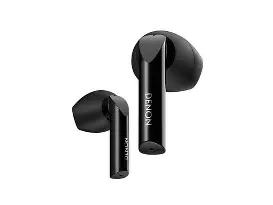
Fit is one of the most common sources of dissatisfaction with any in-ear product. The AH C500W’s small housing is designed for portability, but small housings can fit shallowly and risk poor passive isolation for some ear shapes. Buyers should not assume “one-size-fits-most.” Instead, test multiple ear-tip sizes and consider aftermarket foam tips if seal and noise isolation are priorities.
Real-world use case: an athlete looking to use the buds for runs should prioritize stable fit and water/sweat resistance rated for exercise. If the AH C500W does not provide a snug fit for that individual, it will move during activity and degrade both sound and comfort.
Connectivity and codecs
Bluetooth reliability varies by phone, OS version and surrounding RF environment. The AH C500W is typically suitable for everyday wireless use, but buyers who require ultra-low latency for gaming or professional video work should verify codec support (such as aptX/aptX Adaptive, AAC, SBC) and test latency-sensitive workflows before committing.
Real-world use case: a freelance videographer reviewing sync between audio and video on a mobile device will notice even small latency. If low latency is critical, wired monitoring or a model with explicit low-latency codec support may be the better choice.
Battery life and charging
Battery expectations can be a frequent source of regret. Marketers often quote ideal laboratory runtimes, but real-world figures depend on volume, codec, and usage pattern (calls, ANC, etc.). Treat stated battery numbers as best-case figures and plan for slightly shorter run times in day-to-day use. Also consider charging case capacity and how often the user will have access to a charger during a travel day.
Real-world use case: someone who travels for long flights will want multiple full charges from the case. Confirming the number of charges and the case’s charge speed helps avoid mid-trip power anxiety.
Discover deals on Audio & Headphones — updated daily.
Browse Now →Controls and usability
Button or touch controls affect everyday interaction. Mis-taps, unresponsive gestures, or non-intuitive control mapping are common complaints across earbud models. Buyers should consider how they plan to interact with the device (volume, track skip, voice assistant, call answer) and whether the AH C500W’s controls align with those needs.
Real-world use case: a user who frequently answers voice calls while commuting will value reliable quick-access controls; poorly designed touch surfaces that trigger by incidental contact are problematic in this scenario.
Durability and service
Expectations around water resistance, build longevity and warranty support must be managed. Check the official IP rating, understand what it covers (sweat vs submersion), and factor in how the product will be used—daily gym sessions, heavy commuting, or occasional casual listening. Also, keep proof of purchase and be familiar with the manufacturer’s warranty policies and local service options.
Real-world use case: someone using earbuds for sweaty workouts needs a robust IP rating and a clear path to service if an earbud fails after heavy use.
Biggest buying mistakes and how to avoid them
- Assuming the “best sound” without auditioning: Audio preference is subjective. Avoid buying purely on brand reputation or specs—listen if possible, or ensure return policies allow testing at home.
- Ignoring fit variability: Don’t assume standard silicone tips will create a good seal for every ear. Try foam tips and different sizes before writing off comfort.
- Overlooking real battery expectations: Plan on 10–20% less runtime than quoted and check the case’s number of extra charges.
- Expecting features that aren’t present: If active noise cancellation, multipoint pairing, or a specific low-latency codec are priorities, confirm their availability in the AH C500W before purchasing.
- Not checking warranty and service options: Local service availability matters if something goes wrong after the return window.
- Neglecting use-case testing: Test performance in actual conditions—on the commute, during exercise, or in the home office—to ensure the product meets real needs.
Pros & Cons
- Pros
- Generally balanced, musical tuning that favors vocal clarity and instrumental detail
- Compact, portable form factor suitable for everyday carry
- Reasonable connectivity for standard mobile use
- Good option for listeners who prefer a natural sound rather than exaggerated bass
- Cons
- Fit and seal may be hit-or-miss depending on ear shape; may require aftermarket tips
- Battery life in practice can fall short of lab claims at higher volumes or codec usage
- May lack advanced features some buyers expect (full ANC, multipoint) — verify before buying
- Controls can be less intuitive for users who rely on quick, repeated interactions
How the Denon AH C500W compares
Here is a compact comparison to put the AH C500W in context with two common alternatives that buyers consider in this price/performance neighborhood.
| Feature | Denon AH C500W | Competitor A (General Premium TWS) | Competitor B (Value/Balanced TWS) |
|---|---|---|---|
| Sound signature | Balanced, vocal-forward—good clarity | Often warmer or V-shaped for musical punch | Neutral to slightly bass-boosted |
| Fit | Small housing, variable fit; tip selection critical | Ergonomic designs with multiple stabilizing options | Compact but sometimes shallow fit |
| Battery (typical real use) | Moderate; expect reduced time at higher volumes | Higher-end models typically offer longer runtimes | Comparable or slightly better in budget-focused models |
| Advanced features | Core feature set; confirm ANC/codecs before buying | Often include ANC, multipoint, stronger codec support | Feature set varies; usually focused on value |
| Best for | Listeners who prioritize clarity and brand-quality sound in a small form | Audiophiles wanting extensive features and tuning | Cost-conscious buyers wanting good sound on a budget |
Buying guide: Avoid the pitfalls
Use the following checklist to approach the Denon AH C500W purchase intelligently. This reduces buyer’s remorse and helps match the product to real needs.
1. Define primary use cases
Will the product be used for commuting, exercise, office calls, or casual listening at home? Prioritize features accordingly: comfort and water resistance for workouts, call quality and stable Bluetooth for remote work, passive isolation and tonal balance for commuting.
2. Check the exact feature list
Confirm whether the model includes:
- Active noise cancellation or only passive isolation
- Multipoint Bluetooth pairing
- Supported codecs (AAC/aptX/LDAC) if sound quality or latency matters
- IP rating for water/sweat resistance
3. Prioritize fit testing
Try to audition in-store when possible. If buying online, confirm the retailer’s return policy and plan to test different ear tips (silicone vs foam) for both comfort and seal. A good seal often improves perceived bass and isolation dramatically.
4. Consider battery realities
Ask: how long will the buyer be away from a charger on typical days? If long sessions without charging are common, prioritize models with longer real-world battery life or larger charging cases.
Looking for the best Audio & Headphones deals on Amazon?
Browse Now →5. Assess control scheme and call handling
Check how the AH C500W handles call noise suppression and whether the controls are easy to use with gloves or while moving. If calls are a major use case, prioritize reliable microphone performance and clear button/touch ergonomics.
6. Think about longevity and service
Confirm warranty length and what is covered. Keep receipts and register the product if required. For buyers in regions where warranty service is limited, factor that risk into the purchase decision.
7. Plan for personalization
Use EQ, aftermarket tips, and firmware updates to tune the product to the listener’s preferences. Many users are surprised how much improvement simple tip swaps or software EQs can bring.
Setup and maintenance tips
After purchase, follow these steps to maximize longevity and satisfaction:
- Fully charge the case and earbuds before first use.
- Update firmware if the manufacturer provides a companion app and updates—these often fix connection or sound issues.
- Experiment with ear tips; keep a set of foam tips for travel if insulation and low-volume listening are desired.
- Store the earbuds in the case when not in use to protect them and preserve battery life.
- Clean ear tips and speaker meshes regularly to avoid sound degradation and hygiene issues.
- Rotate volume to moderate levels to preserve driver health and extend battery cycles.
Common buyer questions (brief)
Do these earbuds work well for phone calls?
They can handle everyday calls, but call quality depends on microphone placement and surrounding noise. Buyers who prioritize frequent calls should test in noisy environments or compare models with specialized voice-processing features.
Are they suitable for workouts?
Only if the fit is secure and the IP rating covers sweat. If the AH C500W does not fit stably for a specific ear shape, consider add-on stabilizers or a different model designed for sport.
Can sound be improved?
Yes—fit, ear tips, and equalization make a significant difference. Small changes often yield the biggest perceived improvements.
Conclusion
Buying the Denon AH C500W can be an excellent decision for someone who values a balanced, musical presentation in a compact package. However, several common mistakes—expecting universal fit, overestimating battery life, and assuming feature parity with higher-end models—can reduce satisfaction. The best approach is pragmatic: identify primary use cases, verify required features, audition or confirm a friendly return policy, and be prepared to personalize fit and tuning. With that preparation, buyers can avoid the typical pitfalls and enjoy the strengths the AH C500W offers in everyday listening scenarios.